
Natural Character Built Into Every Plank
Solid Wood Flooring in Morganville for properties where timeless hardwood appearance and long-term refinishing options are priorities
Solid wood planks are milled from single pieces of timber, which means each board shows the full grain pattern and natural color variation of the tree species. Prestige Wood Flooring llc installs solid hardwood in Morganville homes where owners want the option to sand and refinish the surface multiple times over decades, something only solid construction allows. The thickness of the plank—typically three-quarters of an inch—provides enough material to remove scratches, dents, and finish wear through repeated refinishing without compromising the floor's structural integrity.
Installation begins with confirming the subfloor is structurally sound, dry, and level, then nailing or stapling each plank to the underlying surface with fasteners driven at an angle through the tongue edge. The wood is arranged so grain patterns flow naturally, and each piece is tapped tightly against the previous row to eliminate gaps. The process creates a floor that feels unmistakably solid underfoot and shows the dimensional character that distinguishes real hardwood from printed or photographed reproductions.
Arrange an on-site review to assess your subfloor and discuss wood species that match your home's style and traffic patterns.
How Solid Hardwood Addresses Long-Term Wear
Solid wood handles wear differently than surface-layer products because damage affects only the finish or the outermost wood fibers, not a photographic layer or thin veneer. When scratches accumulate or the finish dulls, the entire surface can be sanded down to fresh wood and refinished with stain and protective coatings. This process can be repeated multiple times depending on the plank thickness, which means the floor adapts to style changes and recovers from decades of use.
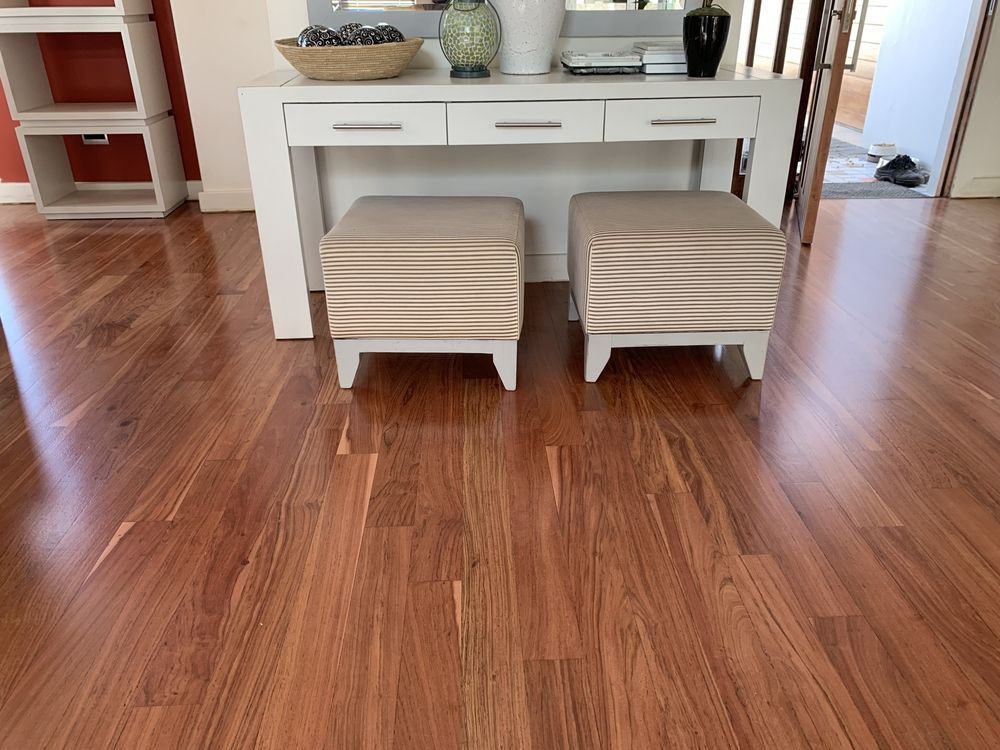
After installation, you'll see consistent plank alignment, tight seams that don't collect debris, and a finish that reflects light uniformly across the room. The floor feels rigid when you walk on it, without the hollow sound that can occur with floating installations, and transitions between planks are nearly invisible unless you're looking for them. Because the wood is installed over a nailed subfloor, there's minimal movement or squeaking even in high-traffic areas.
Solid wood does require more controlled indoor humidity than engineered products, so homes with consistent HVAC operation see better performance. Seasonal expansion and contraction still occur, which is why perimeter expansion gaps and proper fastening techniques are critical during installation..
Answers to Frequent Service Questions
Property owners often ask about the differences between solid and engineered wood, and what to expect during and after installation.
- Why does solid wood cost more than engineered flooring? Solid planks require more raw material and processing since each board is cut from a single piece of lumber, and the installation is more labor-intensive because it typically involves nailing each plank individually rather than using click-lock systems.
- How do I know if my subfloor can support solid hardwood? Solid wood is usually nailed to a plywood or OSB subfloor over floor joists, so the installer checks for adequate structural support, levelness, and moisture levels below 12 percent before beginning installation.
- What wood species work best for high-traffic areas? Oak, maple, and hickory rank higher on the Janka hardness scale, meaning they resist denting and surface wear better than softer species like pine or fir, which show traffic patterns more quickly.
- When should I plan to refinish solid hardwood flooring? Most residential floors benefit from refinishing every ten to fifteen years depending on traffic, but the timeline varies based on finish type, household activity, and whether protective measures like rugs or floor protectors are used in heavy-wear zones.
- What happens if individual planks are damaged after installation? Replacing damaged solid wood planks requires cutting out the affected pieces and weaving in new boards, then sanding and refinishing the area to blend the repair, which is more involved than replacing a single engineered plank in a floating floor.
Prestige Wood Flooring llc provides detailed recommendations based on your home's specific conditions and the wood species that best match your priorities. Set up a consultation to review samples and discuss plank width and finish options.